Friday, May 16, 2014

IB Film: An Interesting Problem to Ponder


"Are Filmmakers Using Drones Illegally? Looks Like It" 

From All Tech Considered on NPR.org today. Considering that several schools around the nation and in the area are already using this technology for promos, games, etc, should Woodrow's film folks and Woodrow's robotics folks team up?

And take a look at this while you're at it. SkyCamUSA


Monday, May 5, 2014

AP English III Summer Reading 2014 - Updated: Now with IB !

My personal and professional opinion of assigned summer reading is that it should be a lot like summer romance: short and sweet, and maybe just a little bit torrid. The selected texts were chosen specifically because they meet these criteria, and because I like them.

Please note that students (ie, incoming AP and IB English juniors at Woodrow Wilson) should have both novels read and the assignment completed by the start of the fall semester 2014-2015; students should further anticipate that there will be a diagnostic exam based on the material for the purpose of figuring out approximately your skill level and potential needs.

THE BOOKS:

AP English III:

Stiff: The Curious Lives of Human Cadavers by Mary Roach.

From her website: "For 2,000 years, cadavers -- some willingly, some unwittingly -- have been involved in science's boldest strides and weirdest undertakings. Stiff is an oddly compelling, often hilarious exploration of the strange lives of our bodies postmortem."

Stiff is a non-fiction piece, but it's pretty funny, very easy to read, and there is some very interesting writing going on in there. And yes, this really is about dead bodies and what happens to them when the original owners are no longer in need of them.


The Reluctant Fundamentalist by Mohsin Hamid.

The Reluctant Fundamentalist is the second novel by Pakistani author Mohsin Hamid, and it is not the story you anticipate. I will fully admit that I was skeptical upon opening the book, but I was quickly disabused of any concerns--in fact, I couldn't put it down. A political thriller, this novella is a classic story of post-9/11 disillusionment with the American Dream and all its wretched excess. It's an awful lot like The Great Gatsby, but Baz Luhrmann hasn't messed it up yet. Part-spy-thriller, part-romance, this story will make you think.


IB Literature III: 

The Catcher in the Rye by J. D. Salinger

You need this novel in your life right now, if you want to know the truth. Holden is muddling through a rough time right now. Holden is stressed out. Holden is having trouble handling school, relationships, family, graduation, and all that "Degrassi High" kind of crap. To put it another way, Holden is the poster-child for postmodern, disaffected youth in America. Read this. Love it. Buy multiple copies of it and horde them, for crying out loud. Wear your hat backwards, if you want to.

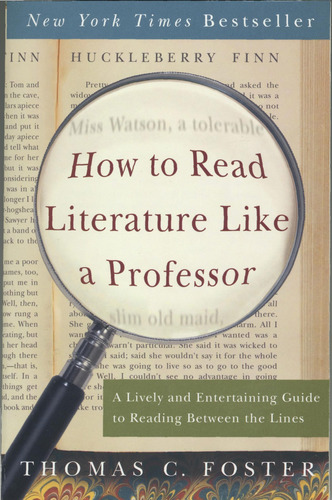
How to Read Literature Like a Professor: A Lively and Entertaining Guide to Reading Between the Lines by Thomas C. Foster

iro·ny   noun \ˈī-rə-nē also ˈī(-ə)r-nē\

: the use of words that mean the opposite of what you really think especially in order to be funny
: a situation that is strange or funny because things happen in a way that seems to be the opposite of what you expected

Did you know that there is actually a SparkNotes summary for this book--a book dedicated to teaching people how to read literature in an intelligent fashion without the need for over-simplified summaries like SparkNotes?


THE ASSIGNMENT:

Incoming AP and IB juniors will write an original rhetorical precis for each of the novels they have read this summer.

What is a precis? 


A precis is a highly structured four sentence paragraph that records the essential elements of a unit of spoken or written discourse, including the name of the speaker/writer, the context of the delivery, the major assertion, the mode of development and/or support, the stated and/or apparent purpose, and the relationship established between the speaker/writer and the audience. Each of the four sentences requires specific information; students are also encouraged to use brief quotations to convey a sense of style and tone.

What is the format of a precis?

  1.  Name of author, [optional: a phrase describing author], genre and title of work date in parentheses (additional publishing information in parentheses or note); a rhetorically accurate verb (such as "assert," "argue," suggest," "imply," "claim," etc.); and a THAT clause containing the major assertion (thesis statement) of the work.
  2.  An explanation of how the author develops and/or supports the thesis, usually in chronological order.
  3.  A statement of the author's apparent purpose followed by an "in order" phrase.
  4.  A description of the intended audience and/or the relationship the author establishes with the audience.

Where can I find a decent explanation of how to write one of these things?
A really good place to go to find an explanation of how to write a rhetorical precis can be found HERE. A link will open to a .pdf file which explains in detail how to write one. In fact, you may notice that the same instructions I offered you above were taken from this .pdf. 

When is it due?
This assignment is due the Friday of the first week of school.

Questions, comments, or concerns?
Please feel free to drop me a line at pmcghee@dallasisd.org with your inquiry, and I will reply at my earliest convenience.

Friday, May 2, 2014

IB Film Summer Assignment *Updated*


Actually, a short series of assignments:
  1.  Please watch this short film about American Cinema and film criticism. This should give you a fairly straightforward account of the way we will view and comment upon film in our class. It will also give you a model for how to complete the reflections that will be required of you for this summer assignment. Pay close attention to the commentary--both what they care to observe and how they comment upon it.
  2. WATCH SOME MOVIES! You must watch a total of ten (10) films over the summer. This part of the assignment is more enjoyable if you actually watch them with other people, perhaps your fellow film students or even <gasp!> your parental units. You will need to watch the following:
  3. Written Assignment: You will turn in a 300-500 word reflection for each film you watch, written within two days of seeing the film. This reflection should include a (very) brief summary of the film, including the year of release, the director’s name and the main characters’ and actors’ names. The rest of the reflection should discuss your analytical, interpretive and evaluative thoughts about the film. (Again, watch the link above in #1 for an example of what I'm talking about.)
***(Ed.- I originally thought this went without saying, but try to watch movies that you have not seen before. I know it says that you can watch two films of your own free choice, but I was hoping that you might want to talk about films that have only recently been released. Ultimately, it's your option, but even if you sample something that you've tasted a thousand times, I hope that you'll look at it in a more critical light than that to which you are accustomed.)

The assignment will be due the Friday of the first week of school. Period. No exceptions, unless it is a REALLY good one, and even then I reserve the right to call shenanigans and say no.

Questions? Comments? Concerns? Ask me! Feel free to comment with your questions, and I promise that I will reply. Or if you believe that your question is too radical or personal to ask publicly, feel free to drop me a line at:

pmcghee@dallasisd.org

Note: I will check my email and my blog often, but not necessarily more than daily (I do have things to do, after all). I promise to get back to you at my earliest convenience.

***There was an issue with the link to the video. The correct video should pop up now.***


Sunday, April 6, 2014

IB Written Assignment (aka the World Lit Paper)

At HL students are required to complete an assignment of 1,200–1,500 words, with a reflective statement of 300–400 words, based on a work studied in part 1 of the course and assessed externally. The following are the criteria by which you will be scored:
 
Criterion A: Fulfilling the requirements of the reflective statement
Marks
Level descriptor
0
The work does not reach a standard described by the descriptors below.
1
Reflection on the interactive oral shows superficial development of the student’s understanding of cultural and contextual elements.
2
Reflection on the interactive oral shows some development of the student’s understanding of cultural and contextual elements.
3
Reflection on the interactive oral shows development of the student’s understanding of cultural and contextual elements.

Criterion B: Knowledge and Understanding
Marks
Level descriptor
0
The work does not reach a standard described by the descriptors below.
1-2
The essay shows some knowledge but little understanding of the work used for the assignment.
3-4
The essay shows knowledge and understanding of, and some insight into, the work used for the assignment.
5-6
The essay shows detailed knowledge and understanding of, and perceptive insight into, the work used for the assignment.

Criterion C: Appreciation of the writer’s choices
Marks
Level descriptor
0
The work does not reach a standard described by the descriptors below.
1-2
There is some mention, but little appreciation, of the ways in which language, structure, technique and style shape meaning.
3-4
There is adequate appreciation of the ways in which language, structure, technique and style shape meaning.
5-6
There is excellent appreciation of the ways in which language, structure, technique and style shape meaning.

Criterion D: Organization and development 
(Note: The word limit for the essay is 1,200–1,500 words. If the word limit is exceeded, 2 marks will be deducted.)

Marks
Level descriptor
0
The work does not reach a standard described by the descriptors below.
1
There is some attempt to organize ideas, but little use of examples from the works used.
2
Ideas are superficially organized and developed, with some integrated examples from the works used.
3
Ideas are adequately organized and developed, with appropriately integrated examples from the works used.
4
Ideas are effectively organized and developed, with well-integrated examples from the works used.
5
Ideas are persuasively organized and developed, with effectively integrated examples from the works used.

Criterion E: Language
Marks
Level descriptor
0
The work does not reach a standard described by the descriptors below.
1
Language is rarely clear and appropriate; there are many errors in grammar, vocabulary and sentence construction, and little sense of register and style
2
Language is sometimes clear and carefully chosen; grammar, vocabulary and sentence construction are fairly accurate, although errors and inconsistencies are apparent; the register and style are to some extent appropriate to the task.
3
Language is clear and carefully chosen, with an adequate degree of accuracy in grammar, vocabulary and sentence construction, despite some lapses; register and style are mostly appropriate to the task.
4
Language is clear and carefully chosen, with a good degree of accuracy in grammar, vocabulary and sentence construction; register and style are consistently appropriate to the task.
5
Language is very clear, effective, carefully chosen and precise, with a high degree of accuracy in grammar, vocabulary and sentence construction; register and style are effective and appropriate to the task.

Total: 25 marks

Sunday, March 16, 2014

Last Minute Advice for the IB Presentations


What you need to do:
  1. Read book.
  2. Choose one major literary device: plot, character(s), theme(s), symbol(s), other.
  3. Watch movie.
  4. Compare how the movie handled--or didn't handle--the [insert major literary device] found in the novel.
  5. Prepare a 10-12 minute class presentation on book's use of [insert major literary device] vs. the movie's use of the same.
Suggestions for how to do Step 5 (any of the following used individually or in concert could help your presentation):
  1. Talk about what interested you about the novel/film, and how the subtle/obvious nature of the [major literary device] that was present in the novel was/wasn't handled in the film satisfactorily.
  2. Write a simple compare-and-contrast paper about the your topic and read it to the class. (You really need to be more creative than this, but this would be the bare minimum needed to "pass.")
  3. Create a slide show/PowerPoint with highlights from your presentation to guide your audience as you teach your topic.
  4. Bring in the DVD (or a link on the Internet) and show a BRIEF clip from the movie to illustrate your claim(s) about your topic. By "brief" I mean anything up to the length of a movie trailer, but could include a series of shorter clips used to support your findings. 
  5. Dress up in a school-appropriate costume to narrate your presentation. Note: you really should not dress up like a Spartan warrior to talk about Pride and Prejudice, but dressing up like a samurai to discuss Kurosawa's interpretation of Shakespeare would be acceptable as long as the costume is not a substitute for analysis. Costumes are only window dressing; therefore, this is entirely optional.
  6. Interpretive dance followed by a 10-12 minute class presentation on book's use of [insert major literary device] vs. the movie's use of the same.
  7. Watch the "making of" section of the DVD and find out if the filmmakers had to make compromises/refused to make compromises in the translation of the novel to film. There may even be some kind of production notes online that discuss similar topics, particularly for popular older films or newer films with big marketing budgets. Note: this is called "research," and its inclusion is always encouraged in a scholarly presentation.
  8. Be creative and come up with another way to impart information about a topic to an audience of your peers. Your target audience is about 15-17 years old; don't bore them.